If you’ve ever felt that your company’s training programs take too long, cost too much, or fail to deliver consistent results, you’re not alone. Many organizations today are stuck between rising skill demands and outdated training models. And with safety risks, equipment limitations, and increased workforce mobility, traditional training simply isn’t keeping up.
This is exactly why VR Training Implementation has become one of the fastest-growing learning strategies in modern enterprises. VR is no longer a futuristic experiment-it’s now a proven, scalable, and cost-efficient form of corporate training used by global brands across industries.
A study by PwC found that employees trained using virtual reality learned 4x faster than classroom learners and were 275% more confident in applying the skills they learned.
In this detailed guide, we’ll walk you through everything you need to know about how to implement VR training successfully-from assessing your needs to choosing the right model, developing content, deploying VR, and measuring ROI.
What Is VR Training and Why Businesses Are Rapidly Adopting It
Before jumping into the step-by-step process, let’s quickly understand what VR training actually means and why organizations worldwide are embracing it.
VR training immerses learners into a 3D, simulated environment where they can practice skills safely and repeatedly. Whether it’s operating machinery, handling medical equipment, or learning customer service skills, employees can train in a fully controlled virtual space that mimics real-world conditions.
The adoption rate is rising incredibly fast:
- The enterprise VR market is projected to grow to $25 billion by 2030.
- According to LinkedIn’s Workplace Learning Report, 70% of L&D leaders are planning to integrate VR into training by 2028.
Across industries like healthcare, manufacturing, energy, aviation, corporate learning, and even retail, companies are using VR simulation training to train faster, safer, and more effectively.
Step 1 - Assessing Whether VR Training Is Right for Your Business
Before you invest time and money into a new training model, it’s important to evaluate whether VR aligns with your organization’s training goals.

Start by identifying your biggest training challenges:
Is your current learning method too slow? Too expensive? Too risky? Too inconsistent?
Then compare the difference between VR training and traditional training to understand what you stand to gain. VR helps eliminate instructor dependency, environment risks, and equipment limitations-something traditional training often struggles with.
Define measurable learning objectives and KPIs such as skill accuracy, reduced downtime, faster onboarding, or reduced training costs. This foundation will guide the entire VR strategy.
Step 2 - Choose the Right VR Training Model for Your Use Case
Once you’ve established the need, your next step is choosing the right VR model.
There are two primary approaches:
-
Off-The-Shelf Vr Training Modules
These are ready-made programs that cover common training needs such as safety practices, customer service, and equipment handling.
-
Custom-Built Vr Training Programs
These are tailor-made to your organization, offering deeply specialized scenarios and workflows.
This is where custom virtual reality solutions become extremely effective, especially for industries like manufacturing, energy, logistics, and aviation.
When evaluating your options, also consider whether your organization needs cloud-based delivery (easy and scalable) or on-premises hosting (more secure and customizable).
Step 3 - Setting Up the VR Training System (Hardware + Software)
To start with VR training system setup, you’ll need both hardware and software components prepared.
Popular headsets include Meta Quest 3, Apple Vision Pro, HTC Vive Focus 3, and Pico. Global VR headset shipments crossed 10 million units in 2023, underscoring mainstream adoption.
Next, choose the right software platform-Unity, Unreal Engine, WebXR, or proprietary training engines. Make sure your system integrates well with learning management systems (LMS) so you can track progress and analytics.
Finally, prepare your physical training environment. Even though VR requires less space than real-world training labs, you still need a safe, obstacle-free area where learners can move freely.
Step 4 - Creating and Developing VR Training Content
Content development is often the most crucial part of VR Training Implementation. It involves designing realistic training scenarios where employees learn by doing-not just watching or listening.
Start with storyboarding the learning flow, defining training steps, outcomes, and assessments. This ensures the VR experience matches real workplace situations.
Interactive VR training increases learner engagement by up to 85%, according to Deloitte Digital.
Use 3D assets, motion capture, voiceover, animations, and interactive controls to create a training environment that feels authentic. Once the modules are built, conduct pilot tests with small user groups to gather feedback and refine the experience.
This is a perfect stage to integrate VR learning solutions to ensure better training workflows and analytics.
Step 5 - Deploying VR Training at Scale
Deployment is where your efforts come to life.
Choose a phased rollout approach. Start with one team or department and expand gradually. This reduces risk, streamlines onboarding, and helps gather real-world feedback.
Integrate your VR system with existing L&D infrastructure-your LMS, reporting dashboard, or workflow management systems. This ensures smooth VR training deployment and helps maintain a single source of truth for learner progress and training outcomes.
Also train your internal facilitators or “VR champions”. They will guide learners, manage sessions, troubleshoot issues, and ensure smooth adoption across teams.
Step 6 - Ensuring Safety, Comfort, and Accessibility in VR Training
Even the best VR training program won’t succeed unless learners feel comfortable and safe.
Manage factors like motion sickness through shorter sessions, higher frame rates, and smooth navigation controls. Establish hygiene protocols for headsets and controllers, especially when devices are shared among multiple users.
Finally, ensure accessibility. Provide subtitles, audio guidance, controller alternatives, and ergonomic adjustments so everyone-including people with mobility or sensory limitations-can participate.
Step 7 - Measuring Success: KPIs, Analytics, and ROI
One of the biggest benefits of VR training is that it provides deep, real-time analytics. You can measure learner performance, errors, response time, engagement, and much more.

VR is also more cost-effective than many assume. According to Accenture, VR training can reduce training time by up to 60% and improve overall learning efficiency.
PwC found that VR training can lead to up to 40% cost savings in certain skill areas.
Common Challenges in VR Training Implementation and How to Solve Them
It’s normal to encounter challenges during the implementation process. Technical issues may arise, employees may show initial resistance, or budgets may seem overwhelming.
However, these challenges are easily manageable when addressed early.
Standardizing workflows, preparing a scalable content strategy, and choosing reliable virtual reality training solutions will help you navigate most obstacles smoothly.
Step-by-Step Checklist for Smooth VR Training Implementation
Although every organization’s workflow is unique, the overall VR implementation journey often follows this logical flow:
- Identify the training problems you want to solve.
- Evaluate whether VR fits your needs.
- Choose your VR training model.
- Select hardware and software platforms.
- Develop and test content.
- Deploy VR in phases.
- Measure results and optimize.
Following this roadmap ensures your investment leads to meaningful improvements in efficiency, safety, and performance.
Benefits of Using VR in Training
The benefits of using VR in training extend far beyond convenience. Studies show dramatic improvements in retention, engagement, and skill application.
- VR learners feel 275% more confident applying skills learned
- VR reduces training errors by up to 50%
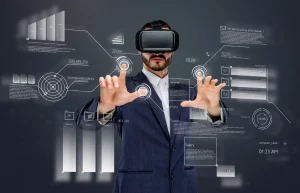
VR also lets employees practice dangerous or risky tasks in a zero-risk environment, helping industries like manufacturing, mining, construction, aviation, and healthcare make training faster and safer.
You Can Also Read: Leading Companies that Use Vr for Training Programs
Conclusion
VR training is no longer a futuristic concept-it’s a practical, measurable, and high-impact learning strategy for organizations of all sizes. If implemented properly, it can transform employee performance, improve safety, and dramatically cut training costs.
Juego NeXR continues to help organizations design, deploy, and scale immersive VR learning solutions with precision. Their expertise ensures businesses adopt VR with clarity, confidence, and long-term success.
Frequently Asked Questions
By assessing needs, choosing a VR model, setting up hardware and software, developing content, deploying it in phases, and measuring ROI.
A VR headset, controllers, content delivery software, and a small safe physical area.
Costs vary, but modular subscriptions and scalable solutions make VR more affordable today than ever.
Yes. Research consistently shows faster learning, fewer errors, and higher retention.
Revolutionize the future of business with Juego neXR
Table of Contents
- What Is VR Training and Why Businesses Are Rapidly Adopting It
- Step 1 - Assessing Whether VR Training Is Right for Your Business
- Step 2 - Choose the Right VR Training Model for Your Use Case
- Step 3 - Setting Up the VR Training System (Hardware + Software)
- Step 4 - Creating and Developing VR Training Content
- Step 5 - Deploying VR Training at Scale
- Step 6 - Ensuring Safety, Comfort, and Accessibility in VR Training
- Step 7 - Measuring Success: KPIs, Analytics, and ROI
- Common Challenges in VR Training Implementation and How to Solve Them
- Step-by-Step Checklist for Smooth VR Training Implementation
- Benefits of Using VR in Training
- Conclusion
- Frequently Asked Questions
Related Posts
Companies Using VR for Training: Leading Brands and Real-World Use Cases
Posted on February 18, 2026

Virtual Reality Future Trends in 2026: How VR Is Evolving Across Industries
Posted on January 20, 2026
Virtual Reality Features and Functions: A Complete Guide
Posted on January 13, 2026




Our Offices

India
Bangalore
GR Grand Plaza, 2nd Floor, JP Nagar, 6th Phase, Bangalore – 560 078



KSA
Jeddah
St Idris Square, 4036 Helmi Koutbi, Al Zahra, Jeddah 23425, Saudi Arabia
Follow Us On:


© 2026 Juego neXR. All Rights Reserved.