Imagine onboarding a new employee without long presentations, repetitive safety demos, or waiting for equipment availability. Instead, you hand them a lightweight headset, and within seconds, they’re inside a realistic training environment-interacting with machinery, handling challenging scenarios, and practicing complex tasks with zero risk involved.
This is exactly why VR training is becoming one of the fastest-growing learning technologies worldwide. And it’s not just a trend-research backs it strongly. According to PwC, learners trained in VR were 275% more confident to apply what they learned compared to those trained in traditional classrooms.
As companies push for better learning outcomes, higher safety standards, and more efficient ways to train employees, VR has emerged as a game changer. In this blog, we break down the top benefits of VR training, the industries adopting it, and why businesses around the world are now prioritizing immersive learning.
What Is VR Training and Why Is It Growing So Fast?
VR training uses immersive 3D simulations to teach employees real-world tasks in a controlled, interactive environment. Instead of just listening or watching, learners experience training hands-on-moving around, performing tasks, and making decisions just as they would in real life.
The growth isn’t surprising when you look at the numbers:
- The global VR market is expected to hit $165 billion by 2030.
- Companies using VR for employee development reported up to 40% reduction in training time.
Between rising workplace complexity and the need for efficient training at scale, VR has become a practical-sometimes essential-solution for modern organizations.
Top Benefits of VR Training for Modern Companies
Let’s dive into the major benefits of VR training and why it’s transforming how businesses develop their workforce.
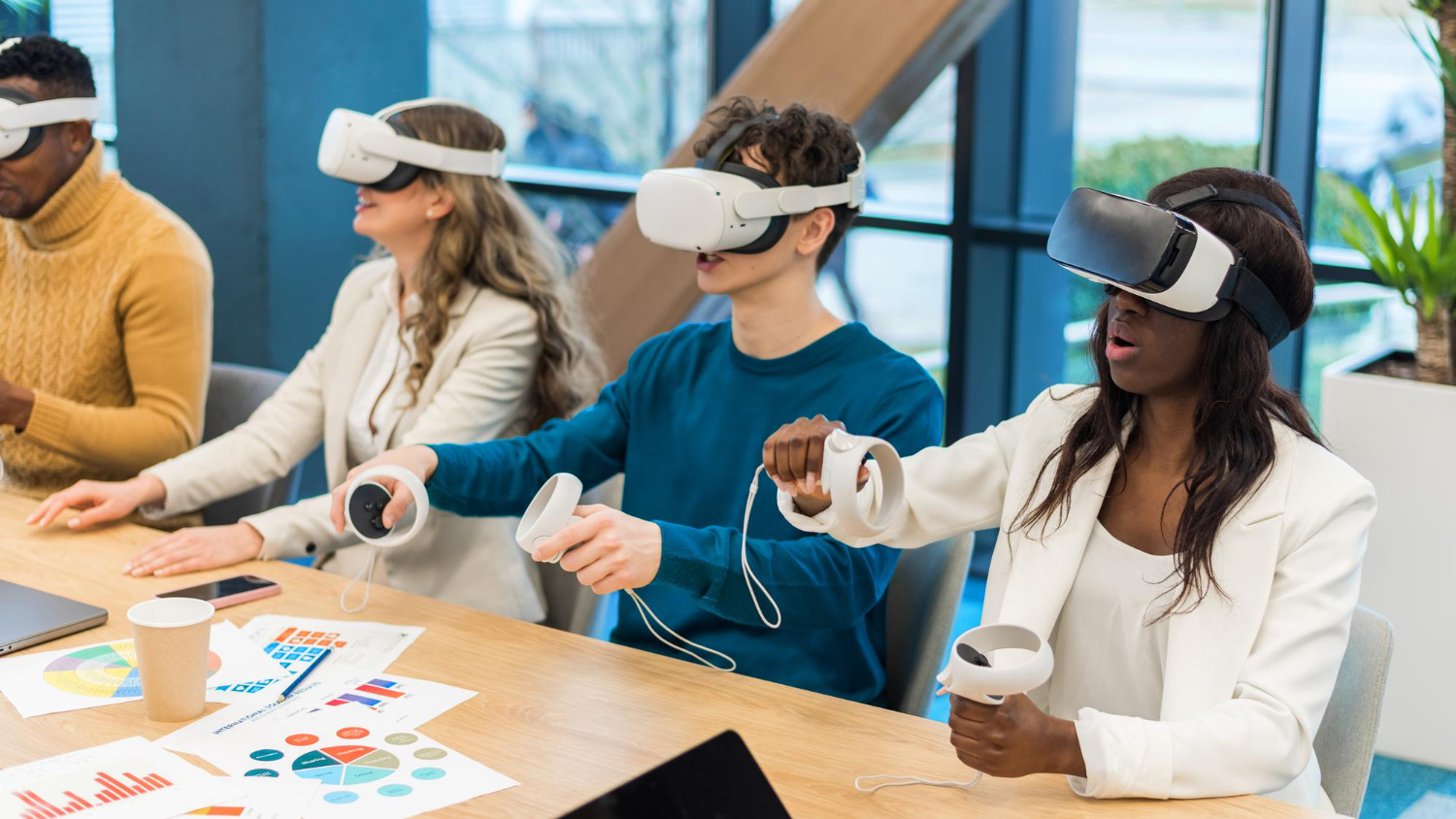
1. A Safe, Controlled, and Risk-Free Training Environment
Some skills are impossible-or too dangerous-to practice repeatedly in real life. VR solves this problem brilliantly.
Whether it’s working at heights, repairing heavy machinery, handling chemicals, or responding to emergencies, employees can practice high-risk tasks without real-world danger.
Research shows VR-based safety training can reduce workplace injuries by as much as 43%.
This allows companies to confidently integrate VR in the workplace without putting employees at risk, while still preparing them for real-world scenarios.
2. Faster Learning and Higher Retention Rates
VR isn’t just engaging-it boosts memory and long-term recall. When learners interact directly with a scenario, they retain far more than they would from watching a video or reading a manual.
Stanford University’s Virtual Human Interaction Lab discovered VR learning improves retention rates by up to 75%.
This makes VR especially effective for complex operational tasks, safety protocols, and soft skills training.
3. Realistic, Hands-On Practice Without Disrupting Operations
Training on real equipment often means downtime, safety risks, and logistical challenges. With VR, employees can practice:
- Equipment handling
- Emergency drills
- Quality control steps
- Patient-care scenarios
- Aircraft maintenance workflows
– all without halting everyday operations.
This is particularly valuable in industries where mistakes are costly or where equipment cannot be taken offline for training.
4. Consistent, Standardized Training Across Locations
One of the biggest challenges for enterprises with multiple branches is maintaining training consistency.
VR ensures:
- Every trainee gets the same instructions
- No variation based on trainer style or location
- Measurable, repeatable results
Large retail chains, airlines, and hotels are already adopting VR for this single reason-it dramatically improves standardization and compliance across locations.
5. Significant Reduction in Training Costs
Although VR requires an upfront investment, it quickly pays for itself through reduced:
- Travel costs
- Trainer hours
- Equipment downtime
- Repetitive sessions
- Physical training materials
PwC found that VR becomes 52% more cost-effective than classroom training when deployed at scale.
This makes it easy for businesses to scale VR training programs without inflating their L&D budgets.
6. Higher Employee Engagement and Confidence
VR transforms training from a passive session into an engaging experience. Learners feel more involved, more alert, and more willing to repeat tasks until they get them right.
PwC also noted that learners trained in VR completed their programs four times faster than traditional classroom learners.
When employees can practice repeatedly in a judgment-free environment, it naturally boosts their confidence-especially for high-pressure tasks like customer handling or emergency response.
Also Checkout: VR Training vs Traditional Training
7. Real-Time Performance Insights and Analytics
Beyond training, VR offers detailed data insights such as:
- Accuracy of actions performed
- Time taken per task
- Decision-making patterns
- Body and eye movements
- Scenario-completion rates
These insights help L&D teams identify gaps early and personalize training paths. This granularity isn’t possible with traditional methods.
8. Supports All Kinds of Learners-Visual, Auditory, and Kinesthetic
Everyone learns differently, and VR naturally supports:
- Visual learners (interactive visuals, 3D objects)
- Auditory learners (voice narration, instructions)
- Kinesthetic learners (hands-on physical movements)
For neurodiverse learners or employees who need repeat practice, VR creates a stress-free, private space to learn at their own pace.
9. Industry-Specific Applications That Drive Real ROI
Manufacturing & Automotive
Factories use VR for equipment handling, welding, assembly lines, and hazard identification. Automotive brands use it for technician training, safety protocols, and virtual prototyping.
Here, companies are increasingly adopting VR in automotive industry to minimize errors and enhance efficiency.
Aviation & Airlines
Pilots aren’t the only ones who need simulation-based training. Airlines use VR for:
- Aircraft maintenance
- Baggage handling
- Cabin crew procedures
- Emergency evacuation
These use cases highlight how virtual reality in aviation drastically improves safety adherence and preparedness.
Healthcare
Doctors, nurses, and technicians use VR for:
- Surgical simulations
- ICU process training
- Patient interaction
- Emergency response
A Harvard study found VR-trained surgeons performed with 230% better accuracy.
Retail & Customer Service
Retail staff use VR for customer scenarios, POS training, visual merchandising, and crowd management during peak hours.
10. Realistic Soft Skills Training Through Immersive Scenarios
Soft skills are hard to teach through theory alone. VR enables:
- Conflict resolution practice
- Leadership simulations
- Difficult conversations
- Interview and negotiation skills
Scenario-based VR makes these sessions immersive and stress-free. Companies can incorporate interactive training simulations to help employees develop emotional intelligence and decision-making skills.
11. Perfect for Remote and Hybrid Workforces
With distributed teams becoming the norm, VR ensures employees receive uniform, high-quality training-regardless of where they are located.
As VR integrates more deeply with AI, adaptive learning paths, real-time coaching, and automated skill assessments will become standard features of enterprise training.
Why Companies Are Rapidly Adopting VR Training in 2025 & Beyond
Rising Employee Expectations
Modern employees-especially Gen Z-expect tech-driven, interactive learning experiences. VR blends familiarity with innovation, making learning more exciting and accessible.
Focus on Safety, Productivity & Compliance
Regulated industries are under pressure to reduce accidents, maintain compliance, and boost operational efficiency. VR assists by standardizing procedures and improving retention.
More Affordable VR Hardware
With standalone devices like Meta Quest and lightweight enterprise headsets, VR is no longer costly or complicated to deploy.
You Can Also Checkout: Features of Virtual Reality Technology
How Companies Can Begin Their VR Training Journey
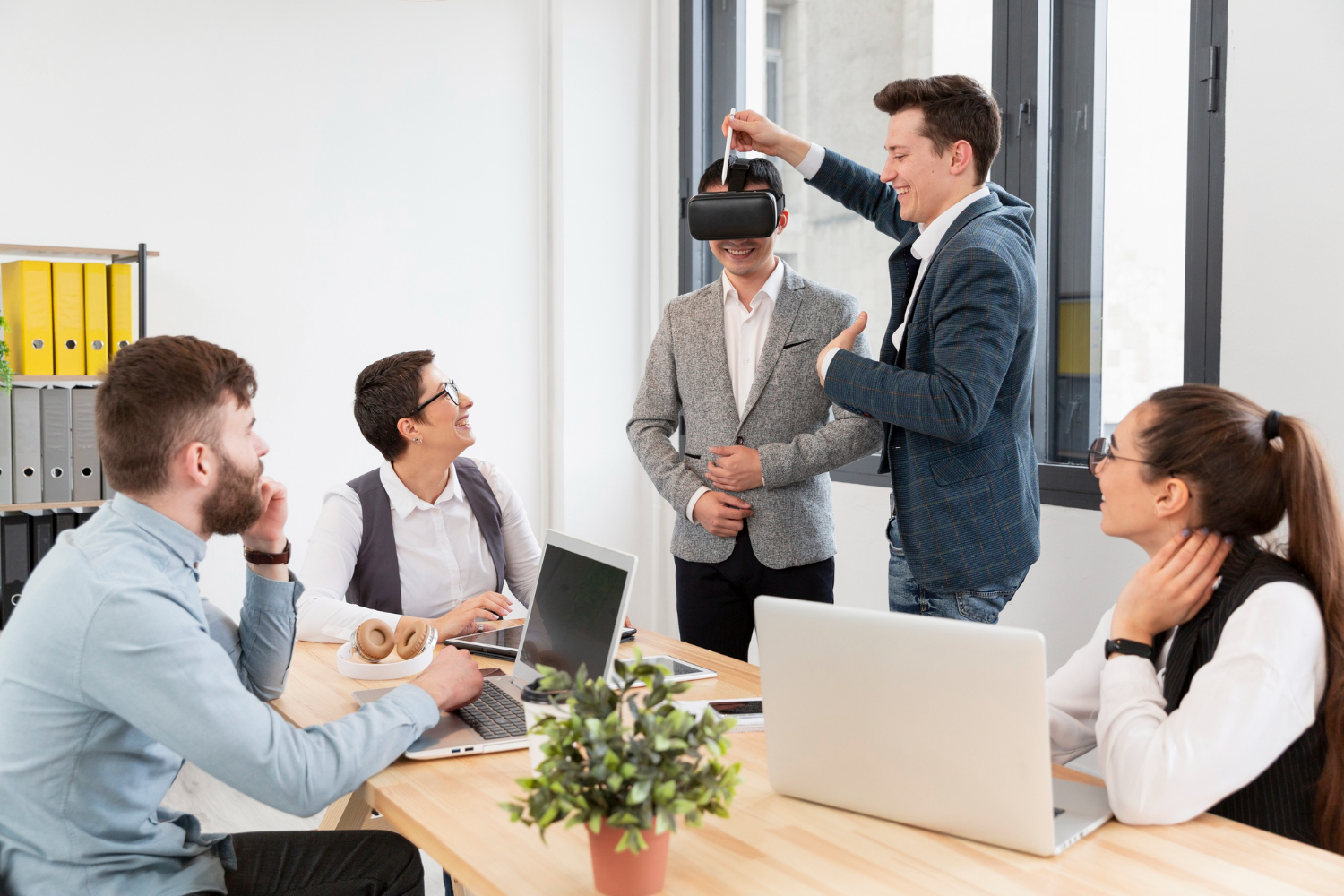
1. Identify Training Gaps and High-Impact Use Cases
Start by identifying where mistakes are costly, training is repetitive, or hands-on practice is difficult.
2. Pick the Right Technology & Content Partner
Choosing the right VR training solutions provider ensures the content aligns with your exact operational needs.
3. Start Small and Scale Gradually
Begin with a pilot module, test it, measure results, and then expand across teams and locations.
4. Track Results with KPIs
Measure completion time, confidence levels, error rates, and retention to understand ROI.
Conclusion
VR training is no longer a futuristic concept-it’s a real, practical solution that’s transforming how employees learn, rehearse, and master essential skills. With higher engagement, lower costs, safer training environments, and measurable outcomes, it’s clear why global enterprises are rapidly adopting immersive learning.
And if you’re exploring how to integrate VR into your organization, Juego NeXR offers advanced immersive training and simulation solutions tailored for businesses across industries.
Frequently Asked Questions
VR training uses immersive simulations to teach employees skills through real-worldlike scenarios.
Yes. Studies show VR learners retain information better and learn faster compared to traditional methods.
Aviation, automotive, healthcare, manufacturing, retail, logistics, and energy.
VR training costs vary depending on content, complexity, and hardware, but most enterprises recover their investment within the first year.
Not completely, but it can dramatically enhance or replace high-risk, expensive, or hard-to-replicate sessions.
Yes, as long as sessions include breaks and follow ergonomic guidelines.
Typically 4-12 weeks, depending on the complexity.
Revolutionize the future of business with Juego neXR
Related Posts
Companies Using VR for Training: Leading Brands and Real-World Use Cases
Posted on February 18, 2026

Virtual Reality Future Trends in 2026: How VR Is Evolving Across Industries
Posted on January 20, 2026
Virtual Reality Features and Functions: A Complete Guide
Posted on January 13, 2026




Our Offices

India
Bangalore
GR Grand Plaza, 2nd Floor, JP Nagar, 6th Phase, Bangalore – 560 078



KSA
Jeddah
St Idris Square, 4036 Helmi Koutbi, Al Zahra, Jeddah 23425, Saudi Arabia
Follow Us On:


© 2026 Juego neXR. All Rights Reserved.