Eight hours of training compressed into fifteen minutes. That is what Walmart achieved when it replaced traditional onboarding for its Pickup Tower kiosks with virtual reality – and it is far from a one-off success story.
If you are responsible for training a distributed workforce, you have probably felt the pressure from every angle. Classroom sessions are expensive, inconsistent, and nearly impossible to scale globally. E-learning modules get clicked through without being absorbed. And for industries where getting something wrong means someone gets hurt – or worse – there is no room for a training program that only half-works.
The good news? A growing number of the world’s most demanding companies have already solved this problem. Today, roughly 91% of enterprises are using or actively planning VR and AR adoption for training and operations. These are not tech startups experimenting with gadgets – they are logistics giants, aerospace manufacturers, global banks, and hospital systems deploying immersive training at a scale that was unimaginable a decade ago.
In this guide, we profile the leading companies that use VR for training programs across industries, break down the real results they have achieved, and show you what it actually looks like to build a program that works.
Why More Companies Are Switching to VR-Based Employee Training
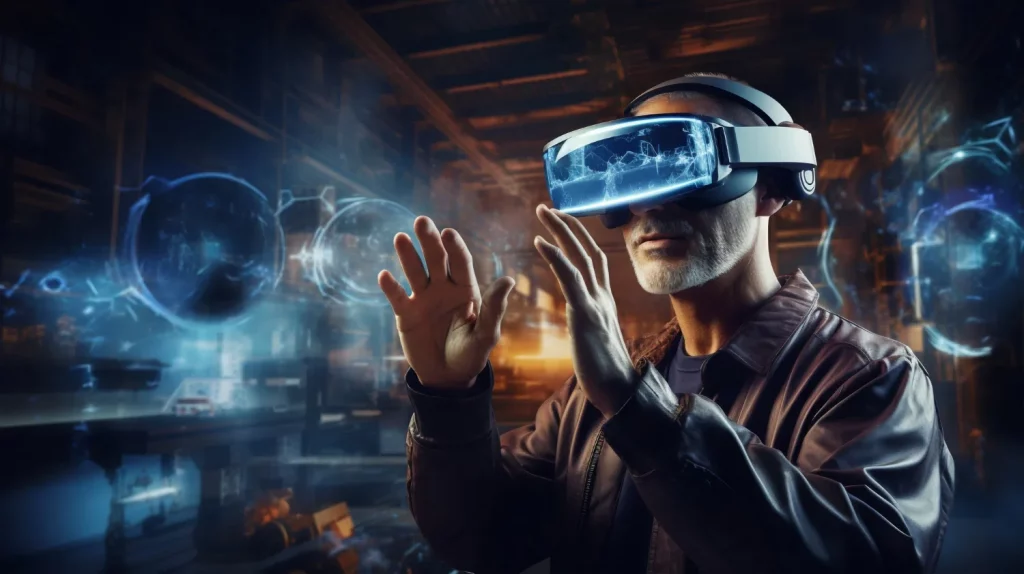
Before we get into specific case studies, it is worth understanding why this shift is happening so fast. Because for most organisations, the decision to invest in VR training is not driven by enthusiasm for technology – it is driven by very concrete frustrations with what came before.
Think about the training challenges that keep L&D leaders up at night. New hires who are not job-ready after weeks of onboarding. Safety incidents that keep occurring despite repeated refresher courses. A global workforce receiving a completely different training experience depending on which regional office they joined. Soft skills sessions that everybody sits through and nobody remembers.
VR does not just address these problems incrementally. According to a landmark PwC soft skills study, employees trained in VR complete programs four times faster than classroom learners and leave training 275% more confident in applying what they learned. Knowledge retention sits at around 75% with immersive formats compared to just 10% from reading-based materials.
If you are evaluating the full picture, the research on the benefits of vr training makes a compelling case – particularly for safety-critical, high-stakes, or emotionally complex training scenarios where traditional formats consistently fall short.
The cost equation is also shifting rapidly. VR training reaches breakeven with classroom learning at just 375 learners. Scale to 3,000 people and it is already 52% cheaper. At 10,000 employees, you are looking at a 64% cost reduction. A 2025 Forrester Total Economic Impact study commissioned by Meta found that enterprise organisations using VR training achieved a 219% return on investment with payback in under six months.
For a direct comparison of the numbers, a dedicated look at VR training vs traditional training shows exactly where the cost crossover happens and how the performance gap widens at scale.
Leading Companies That Use VR for Training Programs: 7 Real-World Cases
From shop floors to operating theatres, here are seven organisations whose VR programs have gone well beyond pilot stage – and delivered results that are hard to argue with.
1. Walmart: From 8 Hours to 15 Minutes
Walmart is probably the most cited example of VR training done at genuine enterprise scale, and for good reason. Working with STRIVR – a simulation company that grew out of Stanford’s Virtual Human Interaction Lab – Walmart has deployed more than 17,000 Oculus headsets across its 4,700+ U.S. stores. Over one million associates have gone through the program.
The training covers a wide range of scenarios: managing the automated Pickup Tower kiosks, handling the organised chaos of Black Friday, customer de-escalation, emergency preparedness, and even diversity and empathy exercises. What makes the Black Friday simulation particularly interesting is that it was filmed using actual 360-degree cameras inside a real Walmart store during an actual Black Friday – so associates are not rehearsing an approximation. They are walking through the real thing.
Associates who trained in VR scored 10 to 15 percent higher on knowledge assessments than those who went through traditional methods, and reported 30% higher training satisfaction. But the number that perhaps speaks loudest came from outside the training room: Walmart’s CEO publicly credited VR preparedness training after associates responded correctly during a real life threatening incident at an El Paso store.
That last point matters for companies in this space. When the question is whether this stuff actually translates to real behaviour under pressure – Walmart has a documented answer.
2. Boeing: Tackling the Tribal Knowledge Problem
There is a challenge quietly growing in every manufacturing and engineering company: experienced specialists are retiring, and the complex, nuanced knowledge they carry – what some call tribal knowledge – is walking out the door with them.
Boeing has tackled this head-on using a combination of VR simulation and Microsoft HoloLens augmented reality overlays. Technicians learning complex aircraft wiring no longer work from flat printed manuals. Instead, they see step-by-step AR instructions layered directly onto the physical components in front of them.
The difference is not marginal. First-attempt accuracy jumped from 50% with traditional manuals to 90% with AR-guided assembly. Training time for complex tasks dropped by 75%. Teams completing Boeing’s AR-assisted wing assembly finished 35% faster than before.
It is worth noting that Boeing’s use of AR overlays alongside full VR simulation is a good illustration of why understanding the different types of virtual reality – from 360-degree video to interactive simulation to mixed reality – matters when you are designing a training program. The right format depends entirely on the task.
3. UPS: Keeping Drivers Safe Before They Turn a Key
Driver safety training has always faced the same fundamental problem: you cannot safely teach someone to recognise a hazard by putting them in the middle of one. UPS’s answer was to build a suite of twelve VR training modules that walk drivers through exactly the situations most likely to lead to accidents – darting pedestrians, blind-spot vehicles, parked cars pulling out unexpectedly, challenging intersections.
Drivers go through these scenarios before they ever sit in a real vehicle on a real route. The result? Training time dropped by 75% – from eight hours to two – while retention climbed to 75%. The programme has been significant enough that UPS invested an additional $345 million in VR training and safety technology in 2023 alone.
UPS is a useful example for a broader point about who are the leading companies using VR for industrial training: in almost every case, the programmes that achieve the best results are the ones solving a training problem that traditional formats simply could not crack.
4. Johnson & Johnson: Surgical Precision Without the Risk
The stakes of getting surgical training wrong are obvious. And yet for decades, the only way to develop procedural skill was through repetition on cadavers – limited in availability, expensive, and emotionally demanding – or on real patients, which carries its own ethical weight.
Johnson & Johnson’s investment in VR surgical simulation changed that equation. A Yale University study examining surgeons trained using VR simulation found they performed 29% faster than their traditionally trained counterparts and made six times fewer errors during laparoscopic procedures.
Beyond surgical skill, J&J has also used VR for PPE protocol training – important context given the scrutiny that donning and doffing procedures received during COVID. VR-trained groups performed the sequence correctly on the first attempt 70% of the time, compared to just 20% in control groups. The gap is striking, and it reflects something consistent across healthcare VR programmes: when the stakes are high and the margin for error is small, immersive training consistently outperforms passive formats.
5. Shell: Training for Situations You Hope Never Happen
You cannot set a section of an offshore oil platform on fire to run an evacuation drill. You cannot trigger a gas leak in a refinery to test emergency shutdown procedures. But these are exactly the scenarios that need to be drilled – repeatedly, realistically, and without anyone getting hurt.
Shell, along with BP, ExxonMobil, and Saudi Aramco, has made VR simulation a core component of safety training for precisely this reason. Shell’s programme covers offshore platform emergencies, fire evacuation, and hazard identification. Workers for the Malikai deepwater platform off the coast of Malaysia completed detailed virtual walkthroughs of the rig before the platform was even operational.
BP reported a 30% reduction in training costs after shifting to VR-led safety programmes. ExxonMobil deployed VR for emergency shutdown and abnormal operations training at its Baton Rouge facility. Across the oil and gas sector, the driver is the same: high-hazard environments where you get one chance to respond correctly.
6. Accenture: Onboarding 150,000 People in the Metaverse
Accenture presents one of the more ambitious uses of VR at enterprise scale. The company onboards more than 150,000 new employees each year globally – a challenge that, with traditional methods, would be almost impossible to deliver consistently across dozens of countries and time zones.
Their solution is something they call the Nth Floor – a persistent virtual campus built on Meta Quest hardware where new hires attend orientation, participate in leadership programmes, and collaborate with colleagues they have never physically met. It is not just onboarding; it is building company culture digitally.
For HR and L&D teams looking at virtual reality training solutions for global onboarding, Accenture’s model is instructive. The programme reduced caseworker turnover by 31% and cut training resource costs by 75% – two metrics that speak directly to the ROI conversation most organisations need to have internally before approving a programme of this size.
7. Bank of America: Rehearsing the Conversations Nobody Wants to Have
Retail banking staff face interactions that require a very specific kind of emotional intelligence: a customer disputing a charge they are convinced is fraudulent, someone on the verge of a financial crisis, a fraud-related confrontation. These situations are high-pressure, unpredictable, and difficult to practise in any realistic way using role-play or scripted simulations.
Bank of America’s VR training programme puts employees directly into these scenarios – with full sensory immersion, realistic customer avatars, and AI-driven responses that adapt to how the employee is reacting. Employees who complete the programme show measurably higher confidence in handling difficult interactions, better de-escalation outcomes, and higher customer satisfaction scores.
This speaks to how companies using VR for employee training are increasingly applying it to soft skills, not just technical procedures. Empathy, communication, and conflict resolution are arguably harder to train than any mechanical task – and VR has shown consistent results in this space across banking, healthcare, hospitality, and beyond.
How Are Companies Using VR for Training Across Industries?
The seven case studies above cover some of the most documented programmes, but VR training adoption is genuinely cross-sector now. Here is a snapshot of how different industries are putting it to work:
| Industry | Primary VR Training Application | Notable Companies |
| Retail | Customer service, emergency prep, onboarding | Walmart, Verizon, Best Buy |
| Healthcare | Surgical simulation, PPE, nurse training | J&J, GE Healthcare, Mass General |
| Aerospace | Assembly, wiring, maintenance, pilot training | Boeing, Airbus |
| Logistics | Driver safety, warehouse ops, hazard ID | UPS, DHL, DB Schenker |
| Oil & Gas | Rig safety, emergency shutdown drills | Shell, BP, ExxonMobil |
| Banking & Finance | Soft skills, fraud, de-escalation | Bank of America, PwC |
| Hospitality | Empathy, guest service, housekeeping | Hilton, Marriott, Lufthansa |
| Military & Defense | Tactical drills, combat simulation | U.S. Army, Navy |
For a closer look at how each of these sectors approaches rollout, the guide to VR Training Implementation covers the practical decisions companies face when moving from pilot to enterprise-scale deployment.
What Types of VR Training Do Companies Actually Use?
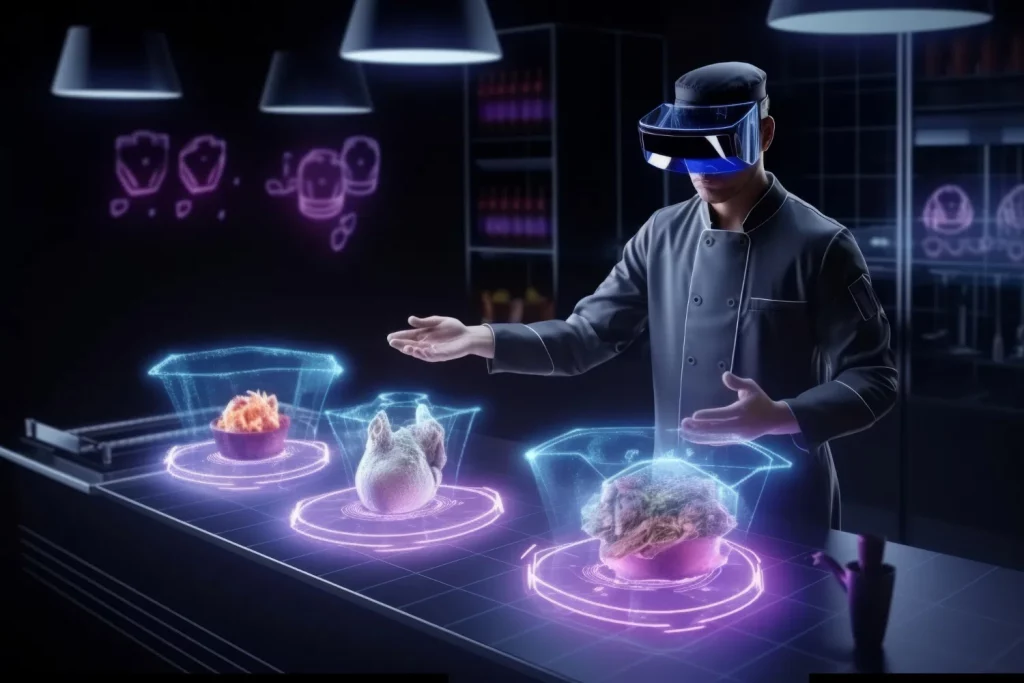
Not all VR training is the same format, and the best programmes choose their approach based on the specific skill they are trying to build. Here are the main categories in use today:
- Safety and compliance training – immersive simulation of hazardous environments where real-world rehearsal is not possible
- Equipment operation training – virtual hands-on practice with complex machinery before touching the real thing
- Soft skills and leadership development – AI-driven roleplay for communication, empathy, de-escalation, and conflict resolution
- Emergency response simulation – realistic drills for fires, evacuations, medical incidents, and security threats
- Onboarding and culture training – standardising the Day One experience across global offices
- Customer interaction training – high-fidelity service and sales roleplay with adaptive AI avatars
- Technical and procedural training – step-by-step guidance for complex processes like surgery, aircraft assembly, or lab protocols
For teams that are newer to immersive learning, exploring the different vr learning solutions available across these categories is a useful starting point before committing to a specific approach.
The ROI Numbers That Make the Business Case
If you are trying to build internal support for a VR training programme, the data is genuinely on your side – but you need to present it in a way that resonates with finance and operations stakeholders, not just L&D teams.
The cost comparison is the most straightforward starting point. PwC’s research shows VR training reaches cost parity with classroom learning at 375 learners. Beyond that scale, the economics shift significantly in VR’s favour:
| Number of Learners | VR vs. Classroom Cost | Source |
| 375 learners | Equal cost – breakeven point | PwC 2020 |
| 3,000 learners | VR is 52% cheaper | PwC 2020 |
| 6,000 learners | VR is 58% cheaper | PwC 2020 |
| 10,000 learners | VR is 64% cheaper | PwC 2020 |
| Enterprise (3-yr) | 219% ROI | Payback < 6 months | Forrester / Meta 2025 |
Beyond cost, the performance metrics matter just as much. VR-trained employees complete tasks faster, make fewer errors, and stay in their roles longer. For organisations in high-turnover environments – hospitality, logistics, retail – the retention gains alone can justify the investment.
What Is Changing in VR Training for 2026
The programmes above represent the current state of VR training, but the technology is moving quickly. A few developments are worth tracking closely:
The most significant shift right now is the integration of generative AI into VR environments. Instead of scripted scenarios with fixed responses, trainees now interact with AI-driven avatars that react dynamically to tone of voice, word choice, and even body language. This makes soft skills training genuinely unpredictable – and far more realistic. For a closer look at where this is heading, the overview of AI in virtual reality covers how these systems are being built and deployed.
Mixed reality – blending physical and digital environments through devices like the Meta Quest 3 and Apple Vision Pro – is also gaining traction in manufacturing and maintenance training. Rather than stepping into a purely virtual world, workers see digital overlays on real equipment, allowing them to train in their actual work environment. Boeing’s wiring programme is an early example of what this can look like at scale.
Digital twins represent another significant development. Companies building new facilities can now train their workforce on an exact virtual replica of the space before it physically exists. Shell did this for the Malikai platform. It dramatically reduces the ramp-up time when a new facility goes live.
If you want to stay current on where all of this is heading, the roundup of virtual reality trends tracks developments in hardware, AI integration, multi-user training environments, and biometric feedback systems that are starting to enter enterprise programmes.
The Honest Challenges of VR Training Implementation
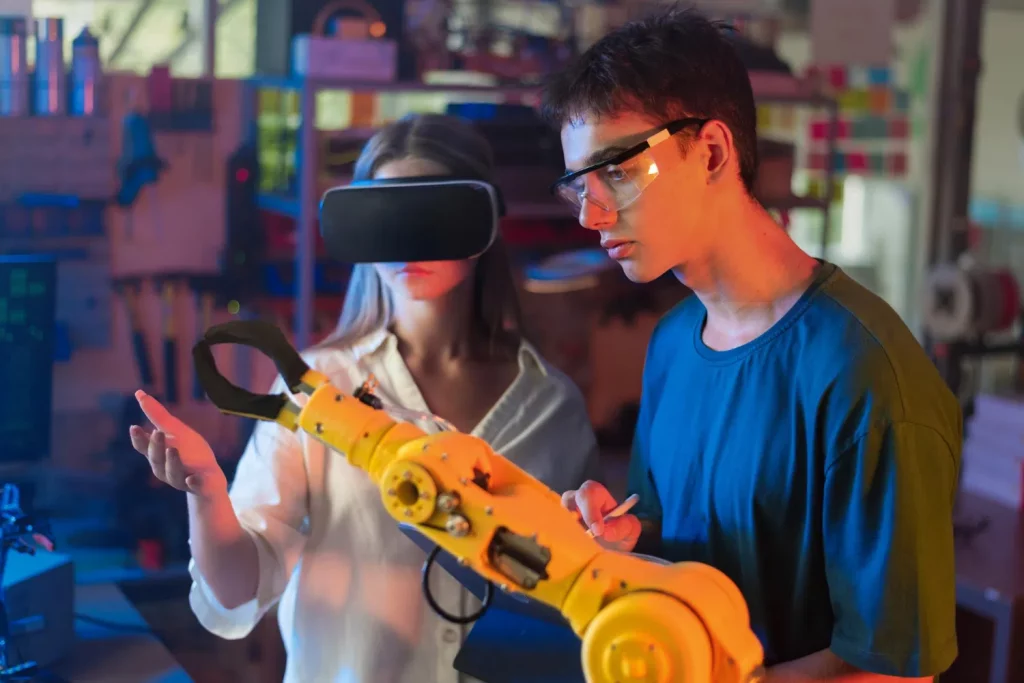
VR training is not without friction, and it is worth being direct about that. The organisations that succeed with it tend to go in clear-eyed about what they are taking on.
Hardware cost is the most common early objection, but it has become significantly less of a barrier. Standalone headsets like the Meta Quest 3 now start at around $500 – a dramatic shift from the $3,000+ tethered systems that were the only option five years ago. For enterprise deployments, device-as-a-service leasing models are also increasingly available.
Content development takes time. A custom VR training module typically takes four to eight weeks to build properly. Off-the-shelf content libraries are growing, but for industry-specific scenarios – the kind that deliver the results cited in this article – custom development is usually necessary.
Change management is often underestimated. Some employees and managers resist new technology, particularly if they associate VR with gaming rather than professional development. Structured pilot programmes with clear outcome metrics help build internal credibility before a full rollout.
Motion discomfort affects roughly 10 to 20 percent of users, though this figure continues to fall as display refresh rates improve and content designers get better at reducing the factors that cause it. Shorter session lengths and better locomotion design have reduced the issue substantially compared to even three years ago.
How JuegoNeXR Helps Companies Build VR Training That Actually Works
Every organisation in this article had one thing in common beyond the technology: they built their programmes with experts who understood both what the technology could do and what the training challenge actually required. The results did not come from buying headsets and hoping for the best.
JuegoNeXR designs and develops custom VR training programmes for enterprise teams across healthcare, manufacturing, logistics, retail, and more. That means full-cycle development – from needs analysis and scenario scripting through 3D environment build, quality assurance, and LMS integration – delivered with a focus on the performance metrics that matter to your organisation, not just technical novelty.
Programmes are built for cross-platform deployment across Meta Quest, HTC Vive, and Apple Vision Pro, and include analytics dashboards that let L&D teams track completion rates, knowledge retention, and performance improvement over time.
Whether you are starting with a proof of concept or scaling an existing programme to a global workforce, the team at JuegoNeXR brings the technical capability and the training design expertise to make it work. Get in touch to talk through what a programme tailored to your industry and your specific training challenges would look like.
See What VR Training Could Save Your Organisation. Start the Strategy Conversation Today!
The Takeaway
The question of what companies use VR for training no longer has a short answer – because the list spans almost every major industry and continues to grow. The more useful question now is what separates the organisations that get transformative results from those that run a pilot and never scale.
The answer, consistently, comes down to solving a real training problem rather than adopting technology for its own sake. Walmart did not buy headsets to look innovative. They bought them because Black Friday was genuinely hard to train for any other way. Boeing did not implement AR to impress investors. They needed to stop tribal knowledge from disappearing when senior technicians retired.
The companies that have achieved the results in this article started with a clear problem. They built – or partnered to build – training content that addressed it directly. And they measured outcomes against real performance metrics, not just completion rates.
Because at this point, the question is no longer whether VR training works. The data is settled. The only variable left is whether your organisation applies it strategically – or watches competitors close performance gaps you cannot afford to ignore.
Frequently Asked Questions
Many of the world’s largest organisations use VR for training, including Walmart, Boeing, UPS, Johnson & Johnson, Shell, Accenture, Bank of America, Hilton, Verizon, Airbus, DHL, PwC, and the U.S. military. Adoption spans retail, healthcare, aerospace, logistics, banking, hospitality, and defence. As of 2025, over 91% of enterprises are using or planning VR and AR training programmes
Current industry data indicates that approximately 91% of businesses are using or actively planning VR or AR adoption for training and workforce development. Among Fortune 500 companies, adoption rates are even higher, with healthcare, manufacturing, and retail leading in programme scale and investment.
The most effective programmes are those built around specific, high-stakes training challenges where traditional formats consistently fall short – safety drills for hazardous environments, surgical skill development, driver hazard recognition, or emotionally complex customer interactions. Results improve significantly when custom content is paired with structured rollout plans, LMS integration, and ongoing performance tracking.
Boeing, Shell, BP, ExxonMobil, Airbus, UPS, and Ford are among the most prominent industrial adopters. Boeing reduced training time by 75% and improved first-attempt assembly accuracy from 50% to 90%. Shell and BP use VR to simulate emergency scenarios on offshore rigs. UPS cut driver safety training time by 75% while improving retention rates.
Hardware costs have fallen substantially – standalone headsets start at around $500. Custom content development typically ranges from $15,000 to $100,000 or more per module depending on complexity. However, VR training reaches cost parity with classroom learning at 375 learners and becomes 64% cheaper at 10,000 learners, according to PwC research. Enterprise programmes have demonstrated a 219% ROI over three years.
Across multiple independent studies, VR training consistently outperforms traditional formats. Employees train four times faster, retain 75% of content compared to 10% from reading-based materials, and report 275% higher confidence in applying skills post-training. For high-risk and technically complex scenarios, the performance gap is even wider – Boeing achieved 90% vs. 50% first-attempt accuracy, and J&J-linked research showed surgeons making six times fewer errors.
Any industry with high-stakes, high-complexity, or high-risk training scenarios sees substantial benefit. Healthcare, aerospace and manufacturing, oil and gas, logistics, retail, military, and financial services all have documented large-scale programmes with measurable results. Hospitality and professional services have also seen strong results, particularly for soft skills and empathy-based training.
The most common challenges are initial hardware cost (now falling rapidly with standalone headsets), content development time (typically four to eight weeks for custom modules), change management resistance among staff unfamiliar with VR, IT integration complexity, and motion discomfort for a minority of users. Most of these barriers have effective solutions and are reducing year on year as the technology matures.
Revolutionize the future of business with Juego neXR
Table of Contents
- Why More Companies Are Switching to VR-Based Employee Training
- Leading Companies That Use VR for Training Programs: 7 Real-World Cases
- How Are Companies Using VR for Training Across Industries?
- What Types of VR Training Do Companies Actually Use?
- The ROI Numbers That Make the Business Case
- What Is Changing in VR Training for 2026
- The Honest Challenges of VR Training Implementation
- How JuegoNeXR Helps Companies Build VR Training That Actually Works
- The Takeaway
- Frequently Asked Questions
Related Posts
Companies Using VR for Training: Leading Brands and Real-World Use Cases
Posted on February 18, 2026

Virtual Reality Future Trends in 2026: How VR Is Evolving Across Industries
Posted on January 20, 2026
Virtual Reality Features and Functions: A Complete Guide
Posted on January 13, 2026




Our Offices

India
Bangalore
GR Grand Plaza, 2nd Floor, JP Nagar, 6th Phase, Bangalore – 560 078



KSA
Jeddah
St Idris Square, 4036 Helmi Koutbi, Al Zahra, Jeddah 23425, Saudi Arabia
Follow Us On:


© 2026 Juego neXR. All Rights Reserved.